Niacinamide
2.00%
Vitamin B3 at the level the brightening function is granted on. It works on uneven tone and it supports the barrier, which is a sensible thing to have in the product you wear on the days your skin takes the most light.

GENOSYS
Loading...
Ultra Shield Sun Cream · SPF50+ / PA++++
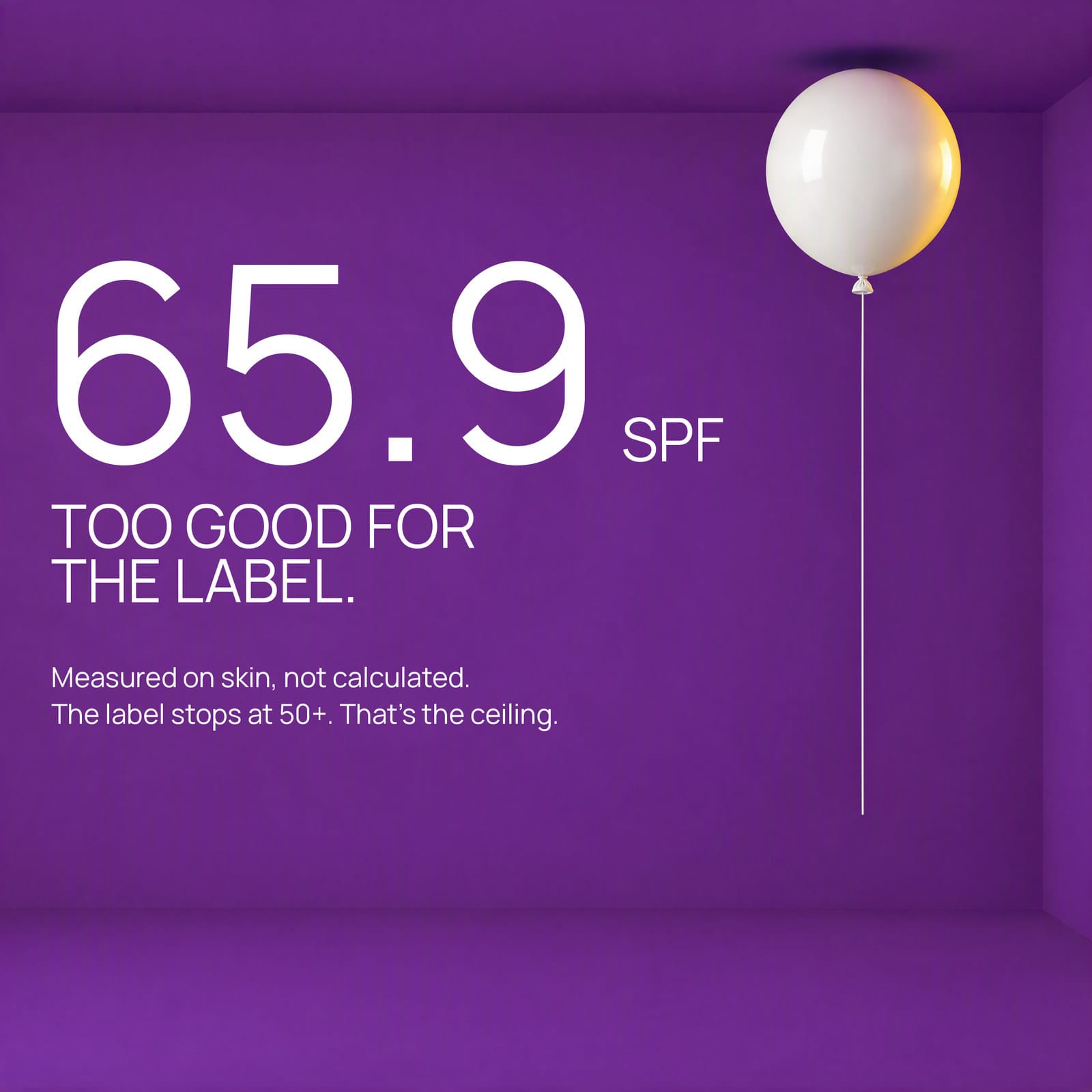
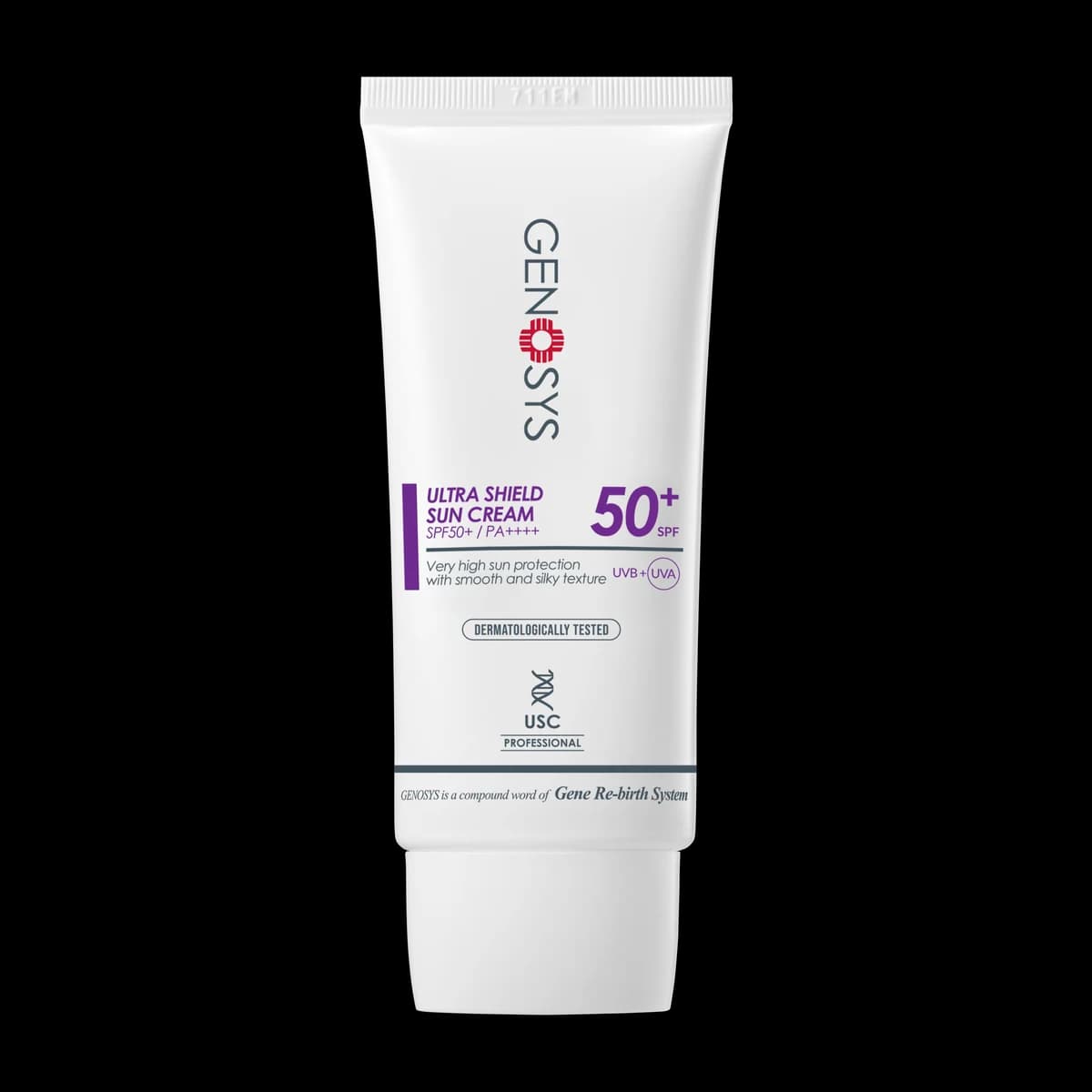
Tested at SPF 65.9. Sold as 50+ because that is the ceiling.
Six UV filters at a combined 17.1%, measured in a laboratory rather than estimated: SPF 65.9 and a UVA protection factor of 23 to 24, against the 22.0 European law asks of a sunscreen this strong. Niacinamide at 2% and adenosine at 0.04% come with it, which is why Korea licenses this as a triple-function cosmetic rather than a sunscreen.
Login to see price
Free delivery over AED 1,000 · Dispatched from Dubai
65.9
Measured SPF, in vivo
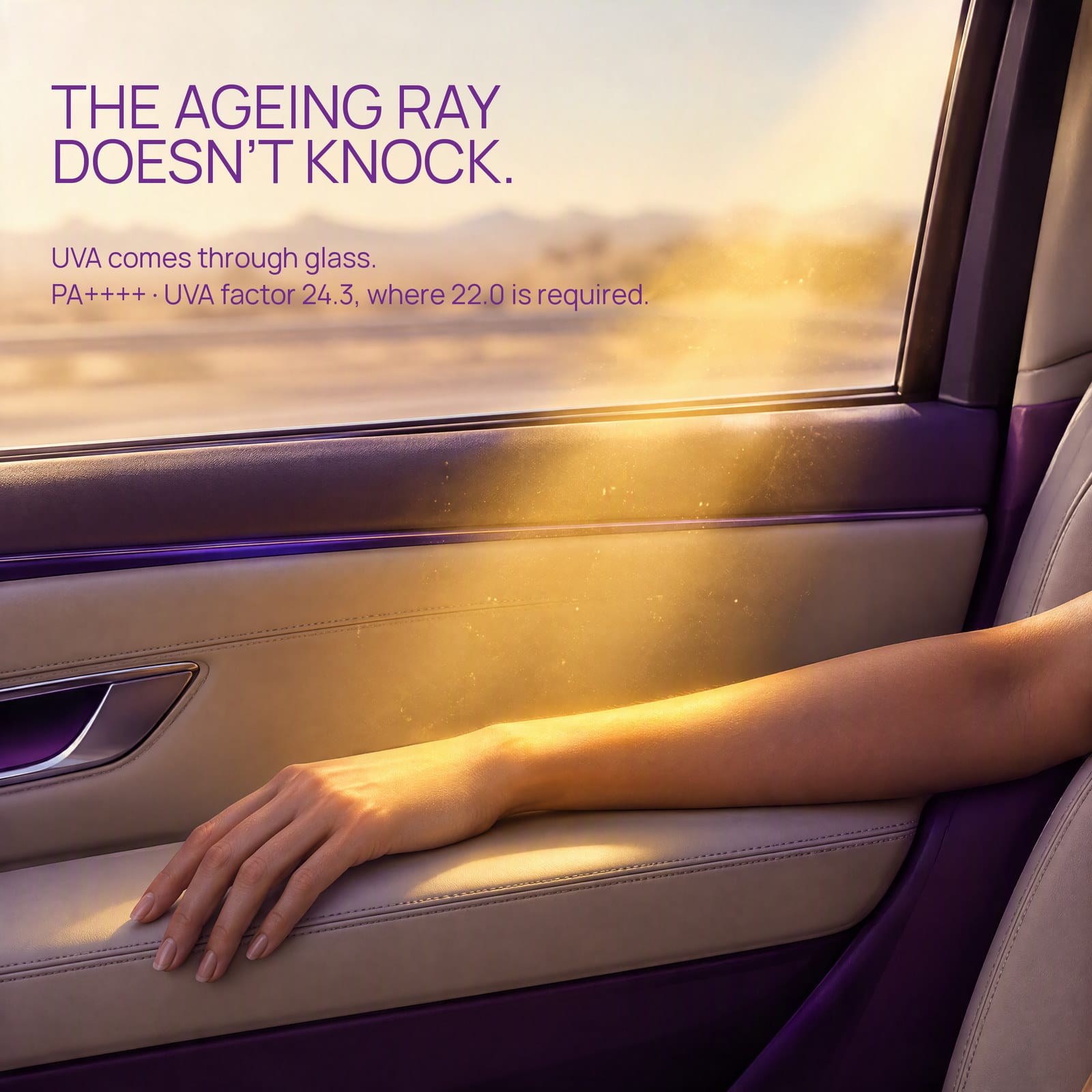
24.3
UVA factor, where 22.0 is required
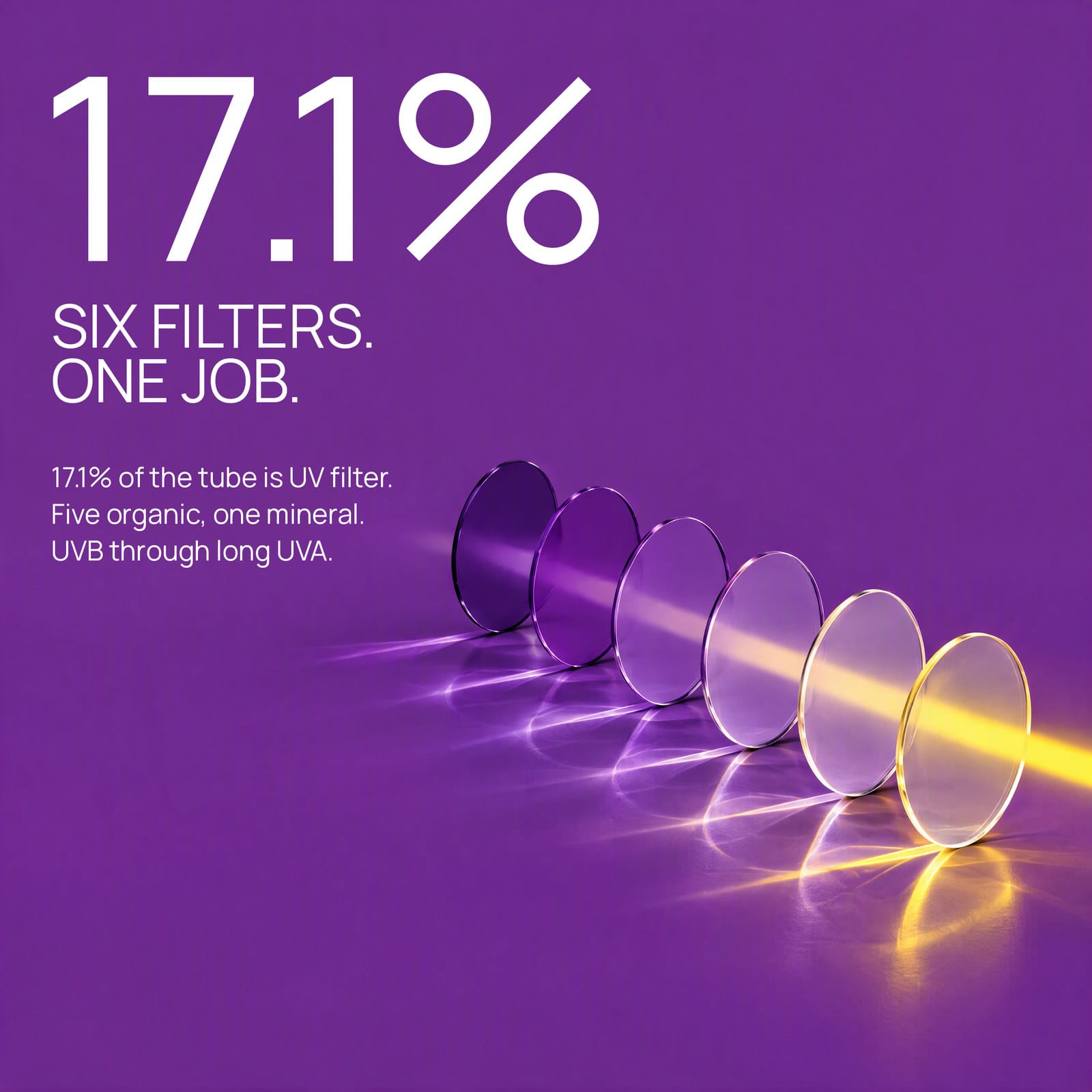
17.1%
Of the tube is UV filter
2%
Niacinamide, at the licensed dose
The numbers
Most sunscreen pages tell you the number on the front of the box. This one comes out of a European safety dossier assessed under EC Regulation 1223/2009, with the test reports named inside it.
65.9 ± 4.74
23.13 and 24.3
UVA-PF ≥ SPF ÷ 3
Testing by Dr Koziej Sp. z o.o. Sp.k., reported inside the product’s EU safety assessment. It is also dermatologically tested by patch test, which the assessor cleared for the label.
The filter system
Five organic filters and one mineral. Between them they cover UVB and both halves of UVA, which is how a single product reaches this grade.
Combined filter load: 17.10% of the tube.
You may see this described as a seven-filter system. It is six. The seventh is butyloctyl salicylate, which at 5% is the largest single ingredient of the group but is not an approved filter - it is a solvent that keeps the real filters dissolved and stable. It raises the SPF, it just does not do it by absorbing UV. The manufacturer’s own technical deck lists six.
| Filter | Concentration | What it covers |
|---|---|---|
| Homosalate | 4.00% | UVB, and it keeps the others in solution |
| Ethylhexyl Salicylate | 3.50% | UVB, and a photostabiliser for the rest |
| Terephthalylidene Dicamphor Sulfonic Acid | 3.07% | Short UVA - the reason this scores as it does |
| Bis-Ethylhexyloxyphenol Methoxyphenyl Triazine | 3.00% | Broad spectrum, UVB through long UVA |
| Ethylhexyl Triazone | 2.00% | UVB, the most efficient filter per gram there is |
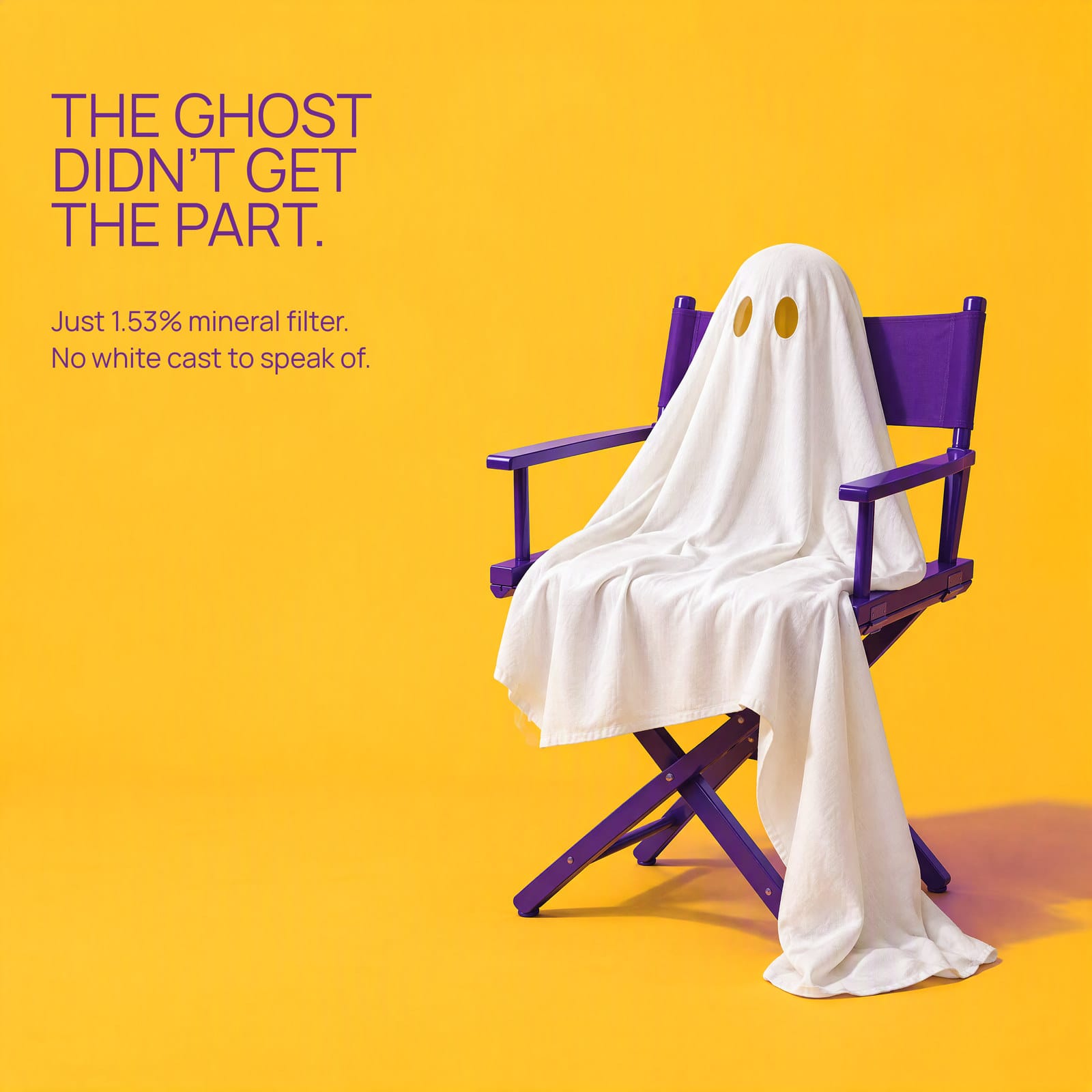
| Titanium Dioxide | 1.53% | Mineral, reflects UVB and short UVA |
Beyond the filters
Korea licenses this as a triple-function cosmetic - protection, brightening and wrinkle improvement - and each function has an ingredient behind it at the concentration the licence requires.
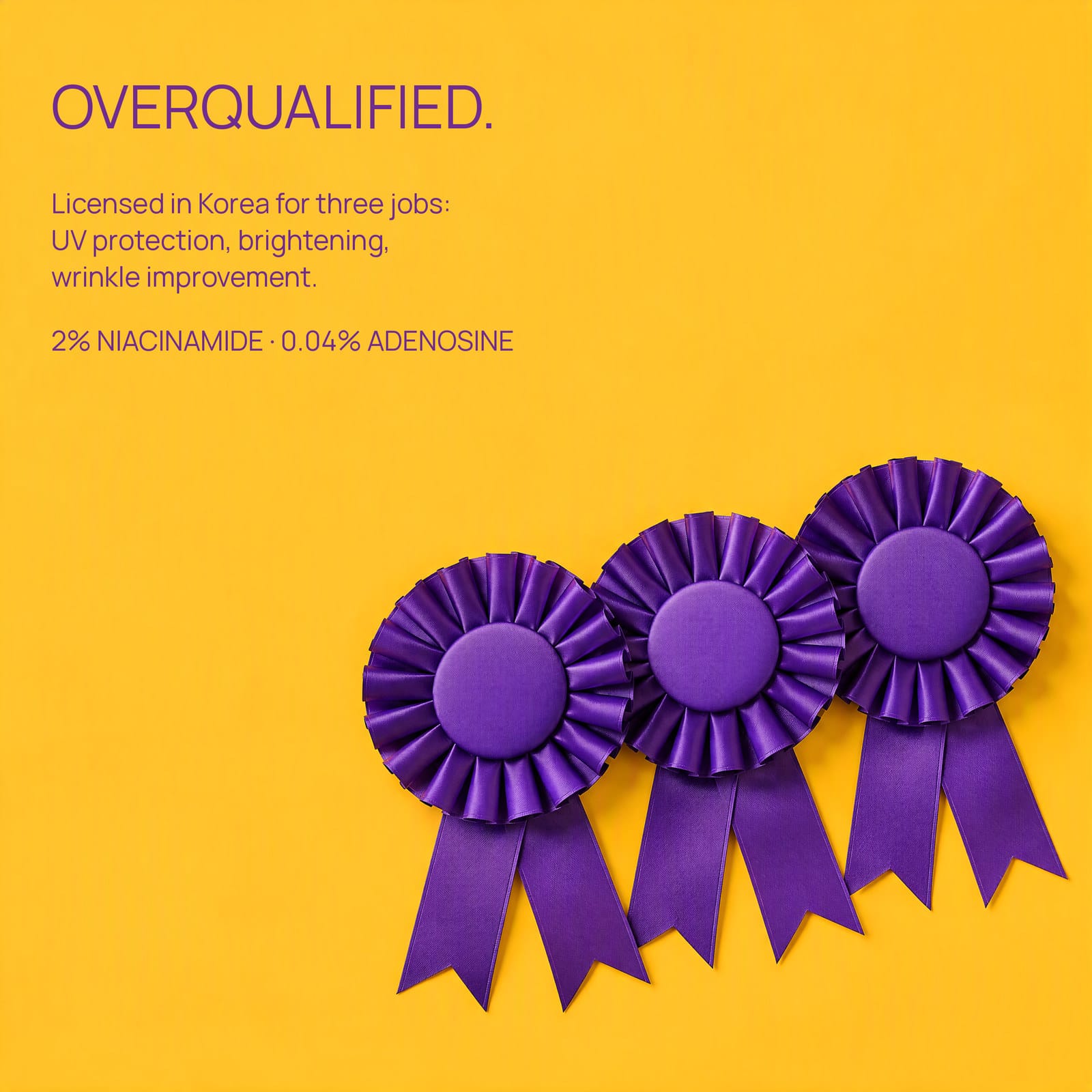
Niacinamide
2.00%
Vitamin B3 at the level the brightening function is granted on. It works on uneven tone and it supports the barrier, which is a sensible thing to have in the product you wear on the days your skin takes the most light.
Adenosine
0.04%
The exact dose Korea licenses for wrinkle improvement - the same figure that appears in every functional anti-ageing product registered there. Small number, specific meaning.
The six filters
17.10%
The protection function itself. Nearly a fifth of what is in the tube is doing the one job you bought it for.
About the recovery complex
This product is also sold on after-sun recovery: a Sunburn Care Complex, MicroHA™, ProbioMETA™, a tropical antioxidant complex. Here are the doses. Ceramide NP is at 0.00000001% - one part in ten billion, about five nanograms in a 50 g tube. The hyaluronic acid and the Lactobacillus ferment are around one part per million each. The four fruit extracts are 25 parts per billion apiece.
We are not going to build a page on that. The reason to buy this tube is a filter system measured at SPF 65.9 with UVA cover to match, plus niacinamide and adenosine at real doses. That is more than enough of a product without the nanograms.
Worth knowing
If you look up the filters you will find a question mark over homosalate. In 2021 the European Commission’s scientific committee said it was not safe at the 10% then allowed and proposed 0.5%; after further data it settled on 7.34%, and that limit is now written into European cosmetics law. This formula uses 4.00%, a little over half the permitted maximum, and the safety assessment records a margin of safety above 100. We would rather you read that here than find it somewhere else.
One limitation, stated plainly
There is no water-resistance test in this product’s file, so we will not imply one. Swim in it, sweat in it or towel off, and you have to reapply - that is true of any sunscreen without a water-resistance claim, and most beach failures come from assuming otherwise. For a day by the water, take the tube with you.
How it spreads, how it finishes, and what it looks like on skin.
How to use
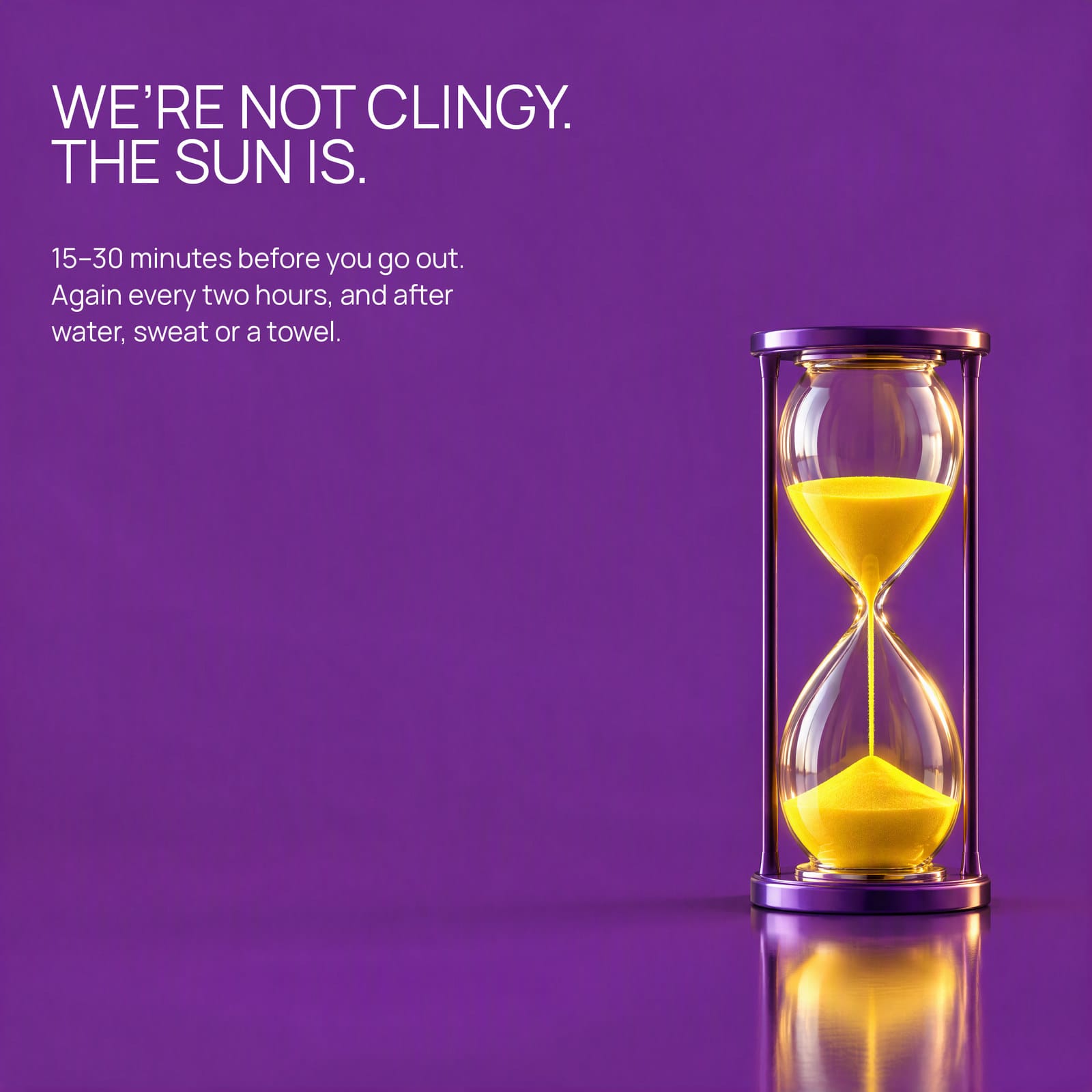
Every morning · reapply every two hours outdoors
After your moisturiser and before anything with colour in it. Sunscreen is the final skincare layer, not the first make-up one.
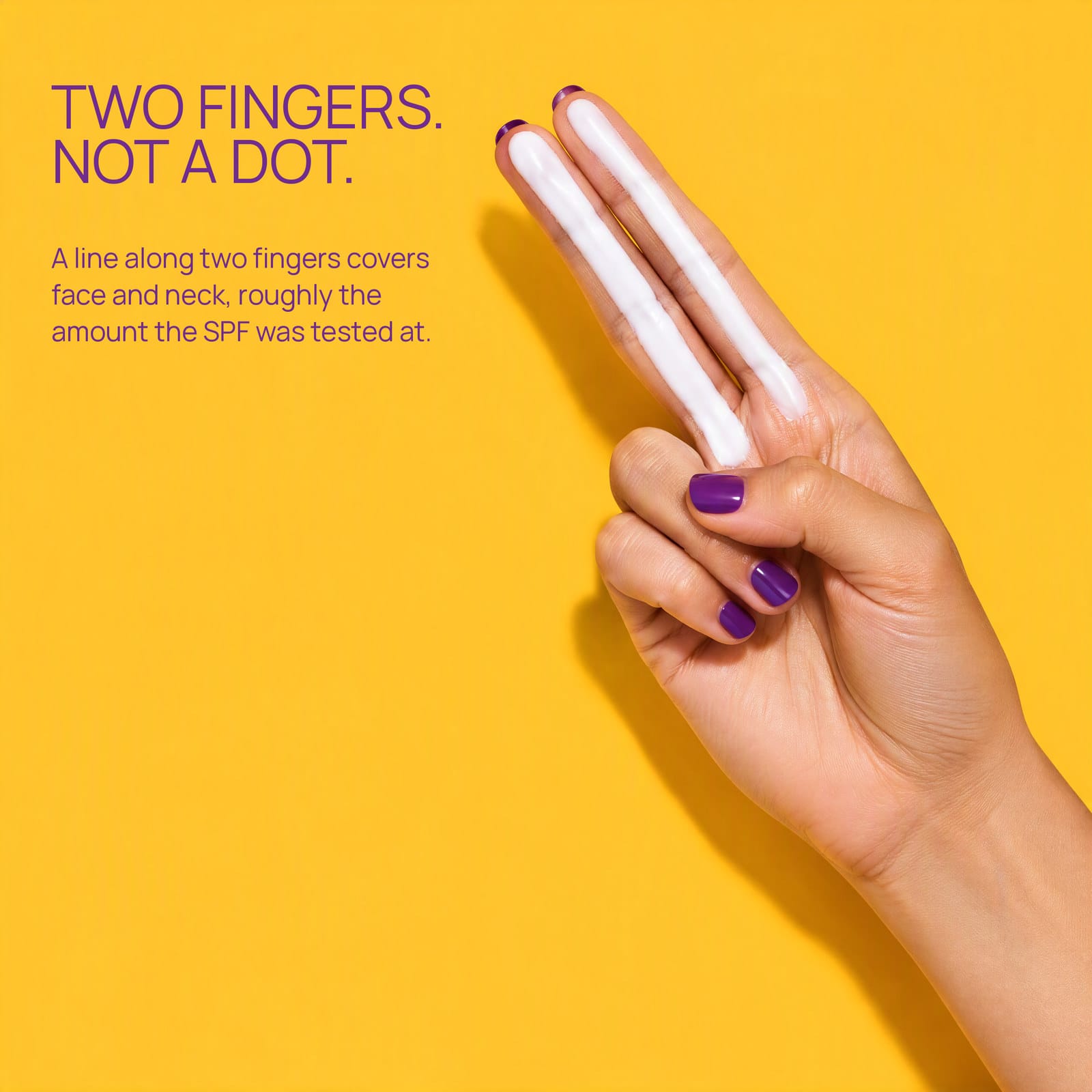
A line of cream along your index and middle finger is roughly the quantity the SPF was tested at. Almost everyone applies about a third of that, and gets about a third of the protection.
The film needs time to set. Applying at the door means walking out under a coat of sunscreen that is not fully formed.
And immediately after swimming, sweating or towelling. This one has no water-resistance claim, so treat water as a reset.
It has a fragrance, at 0.5%. If you are choosing a sunscreen for reactive skin specifically, that is the line in the ingredient list to weigh up.
In this climate
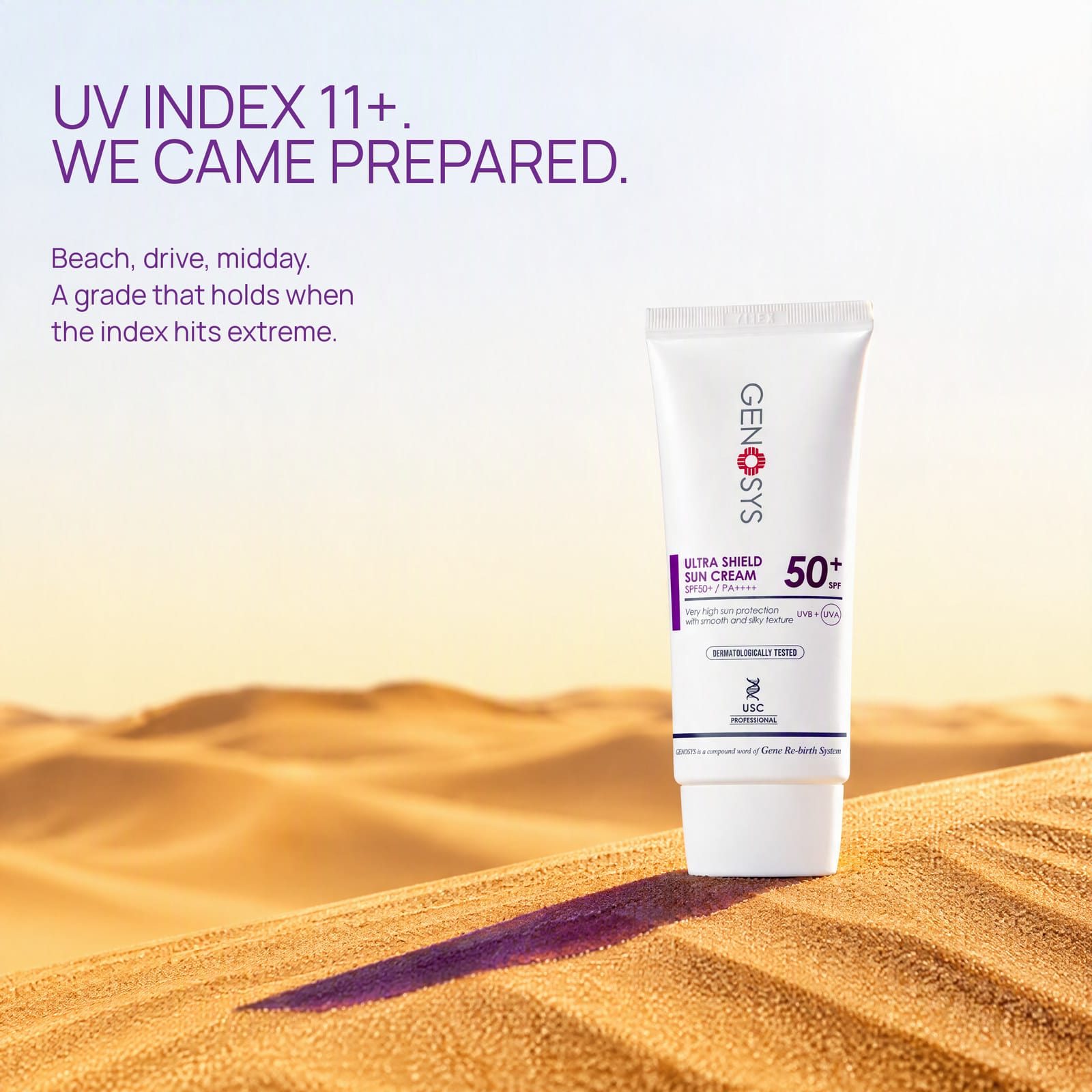
The UV index in the UAE sits at extreme for a good part of the year, including on days that do not feel hot.
Quality
Made in Korea under GMP and released against a specification. The microbiology on this one is as clean as a sheet gets.
![ULTRA SHIELD SUN CREAM [SPF 50+ PA++++]](/_next/image?url=%2Fimages%2Fultra_campaign%2Fs1.jpg&w=3840&q=80&dpl=dpl_Be2af8Fun2GZaA88ECgPrL7QqW8e)
| pH | 7.23, inside a 7.20 ± 1.00 specification - higher than most skincare, because the tromethamine neutralises an acidic filter |
|---|---|
| Fill | 50.9 g against a 50 g declaration |
| Purity | Total aerobic count not detected, against a permitted 100 CFU/g |
| Pathogens | E. coli, P. aeruginosa, S. aureus and C. albicans - all four not detected |
| After opening | Twelve months, marked on the carton |
| Assessment | Full EU safety assessment under EC Regulation 1223/2009 |
The formula
The named ingredients with their concentrations, then the complete list.
Aqua (Water), Butyloctyl Salicylate, Homosalate, Ethylhexyl Salicylate, Terephthalylidene Dicamphor Sulfonic Acid, Bis-Ethylhexyloxyphenol Methoxyphenyl Triazine, Diisopropyl Sebacate, Ethylhexyl Triazone, Dimethicone, Niacinamide, Propanediol, Titanium Dioxide, Tromethamine, Glyceryl Stearate, Hydrogenated Poly(C6-14 Olefin), 1,2-Hexanediol, Caprylic/Capric/Myristic/Stearic Triglyceride, Lithospermum Erythrorhizon Root Extract, Scutellaria Baicalensis Root Extract, Ceramide NP, Hydrolyzed Sodium Hyaluronate, Lactobacillus Ferment Lysate, Ananas Sativus (Pineapple) Fruit Extract, Carica Papaya (Papaya) Fruit Extract, Litchi Chinensis Fruit Extract, Psidium Guajava Fruit Extract, Adenosine, Tocopherol, Glycerin, Jojoba Esters, Glucose, Hydrogenated Lecithin, Ethylhexylglycerin, Xanthan Gum, Methyl Trimethicone, Stearic Acid, Polyhydroxystearic Acid, Arachidyl Glucoside, Aluminum Hydroxide, Potassium Cetyl Phosphate, Polyurethane-15, Vinyl Dimethicone/Methicone Silsesquioxane Crosspolymer, Ammonium Acryloyldimethyltaurate/VP Copolymer, Polyacrylate Crosspolymer-6, Dimethicone/Vinyl Dimethicone Crosspolymer, Arachidyl Alcohol, Cetearyl Alcohol, Behenyl Alcohol, Dimethiconol, t-Butyl Alcohol, Butylene Glycol, Polymethylsilsesquioxane, C9-12 Alkane, C13-14 Alkane, Polyglyceryl-10 Laurate, PEG-100 Stearate, Parfum
Every ingredient, in the same order as the carton in your hand.
Before you use it
Precautions as printed on the GENOSYS carton.
The formula
The details
![ULTRA SHIELD SUN CREAM [SPF 50+ PA++++]](/_next/image?url=%2Fimages%2Fultra_campaign%2Fs12.jpg&w=3840&q=80&dpl=dpl_Be2af8Fun2GZaA88ECgPrL7QqW8e)
Questions
Because 50+ is the highest figure a sunscreen label is permitted to state in Europe, regardless of how it performs. The regulator caps it deliberately, on the grounds that the difference between an SPF 50 and an SPF 70 is small in practice and encourages people to stay out longer. The measured figure is 65.9; the label is telling the truth in the only way it is allowed to.
Six. Some of our own older material says seven, which we are correcting. The extra one being counted is butyloctyl salicylate at 5% - a solvent that keeps the real filters dissolved and stable. It does raise the SPF, but it does not absorb UV, and neither the manufacturer’s technical deck nor the registration counts it as a filter.
You can, but reapply as soon as you are out and dry. There is no water-resistance test in this product’s file, so we do not claim water resistance and you should not assume it. This is the most common way people get burnt while wearing sunscreen.
Very little. Only titanium dioxide at 1.53% is mineral and the other 15.6% of the filter load is organic and colourless, so it sits far closer to a Korean chemical sunscreen than a mineral one. It is also the reason the texture is silky rather than thick.
They are in the formula, at doses too small to do anything: the Ceramide NP is at one part in ten billion, and the hyaluronic acid and probiotic ferment at roughly one part per million each. Buy this for the filter system, the niacinamide at 2% and the adenosine at 0.04%. Those are real, and they are plenty.
The formula is dermatologically tested by patch test and the filter set is a modern one with no oxybenzone or octinoxate. The one thing to weigh is the fragrance at 0.5%: if you are specifically choosing for reactive skin, a fragrance-free sunscreen may suit you better, and we would rather say so than sell you the wrong tube.
Tested at SPF 65.9. Sold as 50+ because that is the ceiling.
ULTRA SHIELD SUN CREAM [SPF 50+ PA++++]
Free delivery over AED 1,000 · Dispatched from Dubai
![MULTI SUN CREAM [SPF 40 PA++]](/_next/image?url=%2Fimages%2Fmultisun_campaign%2Fmain.jpg&w=3840&q=80&dpl=dpl_Be2af8Fun2GZaA88ECgPrL7QqW8e)


