
The Next K-Beauty Breakthrough: Delivery Tech, PDRN and Exosome-Inspired Skin Boosters
K-beauty’s most interesting shift for 2026 is not another single “miracle ingredient.” It is the move from what is inside the formula to how the formula is delivered.
Across Korean beauty, the language is becoming more technical: PDRN, peptides, spicules, exosome-inspired vesicles, skin boosters, barrier recovery and bioavailability. This is the clinical-meets-consumer moment: professional ideas translated into textures people can actually use at home.
From hero ingredients to delivery systems
For years the beauty conversation was dominated by actives: retinol, vitamin C, acids, niacinamide and peptides. Those still matter. But the new Korean question is sharper: can the active reach the right layer of the skin in a controlled, comfortable way?
That is why delivery technology is getting attention. Spicules create a physical delivery story. Exosome-inspired formulas create a signaling story. PDRN and peptides create a repair-and-resilience story. The winning routines will combine science with restraint.
The four technologies to watch
1. PDRN: the recovery-coded ingredient
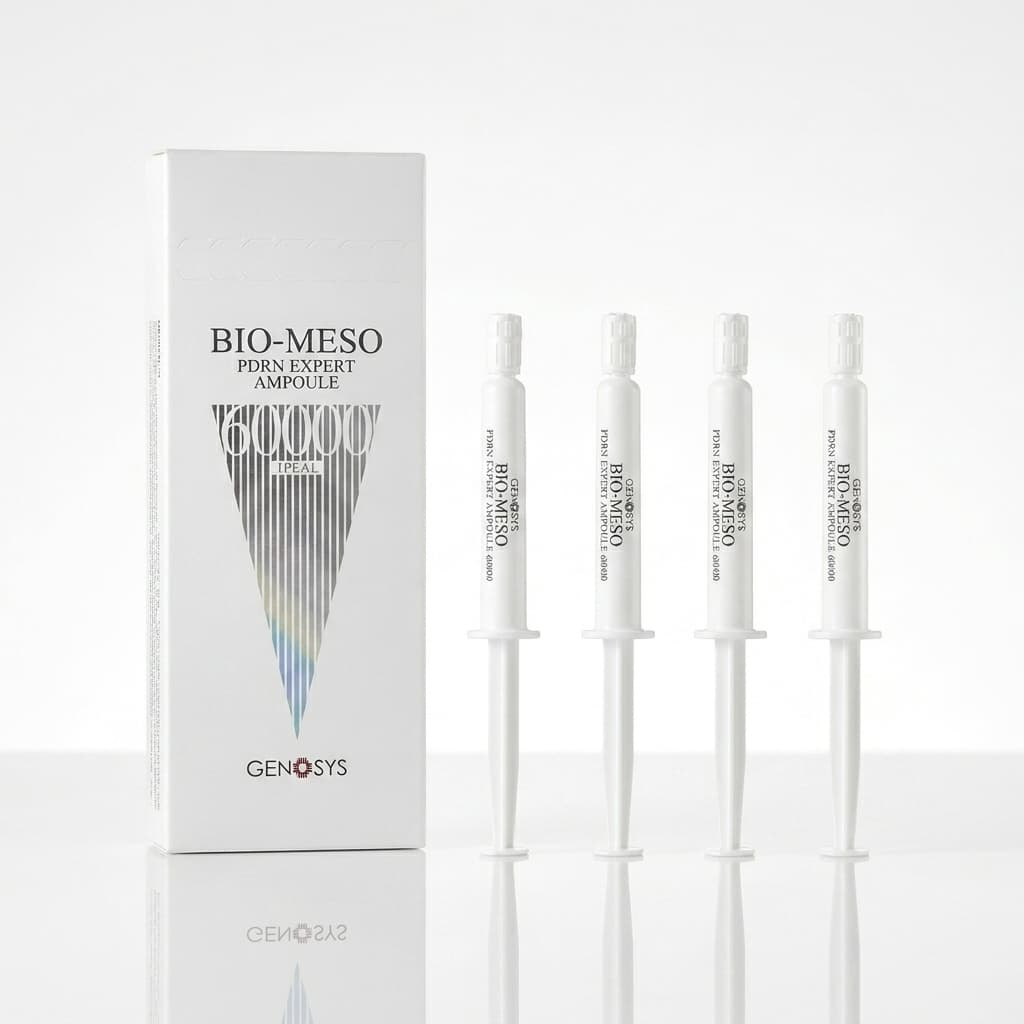
PDRN, often discussed as “salmon DNA” in beauty media, moved from clinic language into serums, ampoules and masks. For retail skincare, the strongest positioning is not “miracle regeneration” but comfortable support for skin that looks calmer, smoother and more resilient.
2. Peptides: slow-aging without the drama
Peptides remain important because they fit daily use: firming, smoothing and barrier-friendly anti-aging positioning without the irritation profile many clients associate with strong retinoids or acids.
3. Spicules: “liquid microneedling” needs education
Spicules are tiny needle-like structures used in some Korean formulas to create a tingling, delivery-focused skincare experience. They are exciting, but they require clear guidance: patch test, avoid overuse, and do not layer immediately with strong acids or retinoids unless your skin is already trained.
4. Exosome-inspired skincare: prestige with nuance
Exosomes are part of the global biotech vocabulary, but cosmetics must be precise. In consumer skincare, the trustworthy language is exosome-inspired, biomimetic, signal-support, texture refinement and hydration support - not clinic-equivalent claims.
Why this matters in the UAE and GCC
The GCC is becoming more ingredient-literate. Clients no longer ask only for “something hydrating” or “something brightening.” They ask about barrier repair, pigmentation, peptides, PDRN and Korean manufacturing. At the same time, UAE skin lives under heat, UV, humidity swings and heavy air-conditioning. That means high-tech skincare has to be paired with barrier discipline.
GENOSYS view: advanced does not mean aggressive
- Introduce one high-performance step at a time.
- Protect the barrier before chasing tingling or “instant” sensations.
- Use sunscreen consistently when using any texture-refining routine.
- For sensitive or inflamed skin, start with calming and hydration first.
The real trend: smarter routines
The future of K-beauty is not just glass skin. It is educated skin: routines that understand delivery, recovery, climate, texture and tolerance. The most credible formulas will not shout the biggest claim. They will explain how the product works, who it is for, and how to use it safely.
That is the kind of innovation we are watching from Korea: high-performance, but still wearable; technical, but still elegant; advanced, but respectful of the skin barrier.
Need help choosing a routine?
Start with your skin condition, not the trend. Use our AI skin analysis or speak to the GENOSYS team before adding strong actives or delivery-focused formulas.
Sources and trend reading
Published 17 May 2026 · by GENOSYS Team
Comments
Please log in to leave a comment
Log in