
Does the Collagen You Drink Reach Your Face?
GENOSYS Explains · Myth vs fact
STRAIGHT
TO THE FACE.
A spoon of collagen in your morning coffee feels like skincare. Here is where it actually goes, what the cleanest trials found, and the shorter way to your face.
Collagen is the protein that gives skin its firmness, so drinking more of it sounds like simple arithmetic: more collagen in, more collagen in your face. Powders, shots and gummies are sold on exactly that promise. The body does not do arithmetic, though. It does digestion.
To your body, it is just protein.
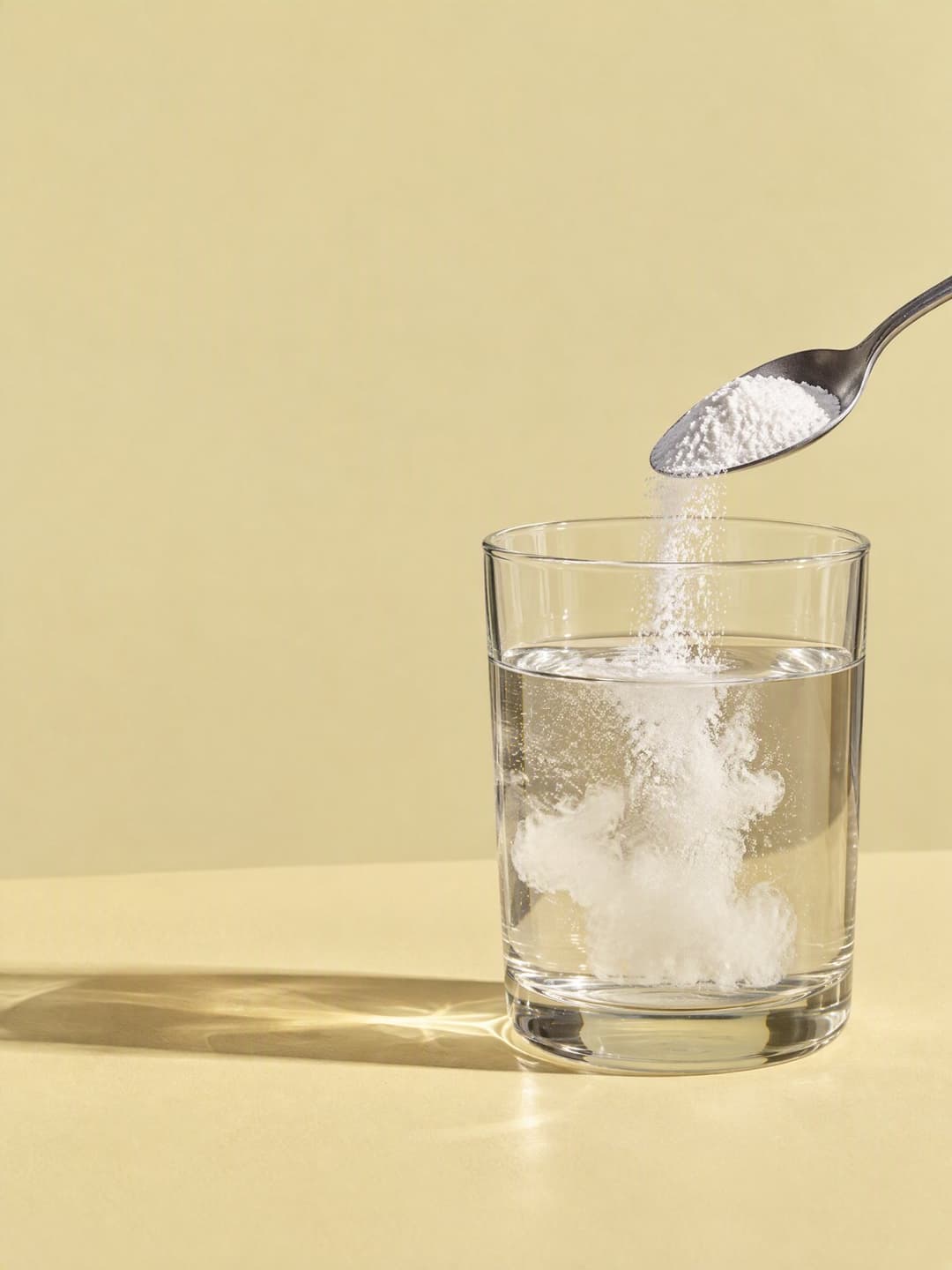
Collagen you swallow meets your stomach like any other protein: chicken, lentils, eggs. Digestion takes it apart into amino acids and small fragments, and that is the form in which it enters the blood. Nothing arrives at your cheek labelled "collagen".
Some of those fragments do circulate for a while, which is why the idea is not absurd. But a fragment in the blood is not new collagen in the skin.
Then your body decides where it goes.
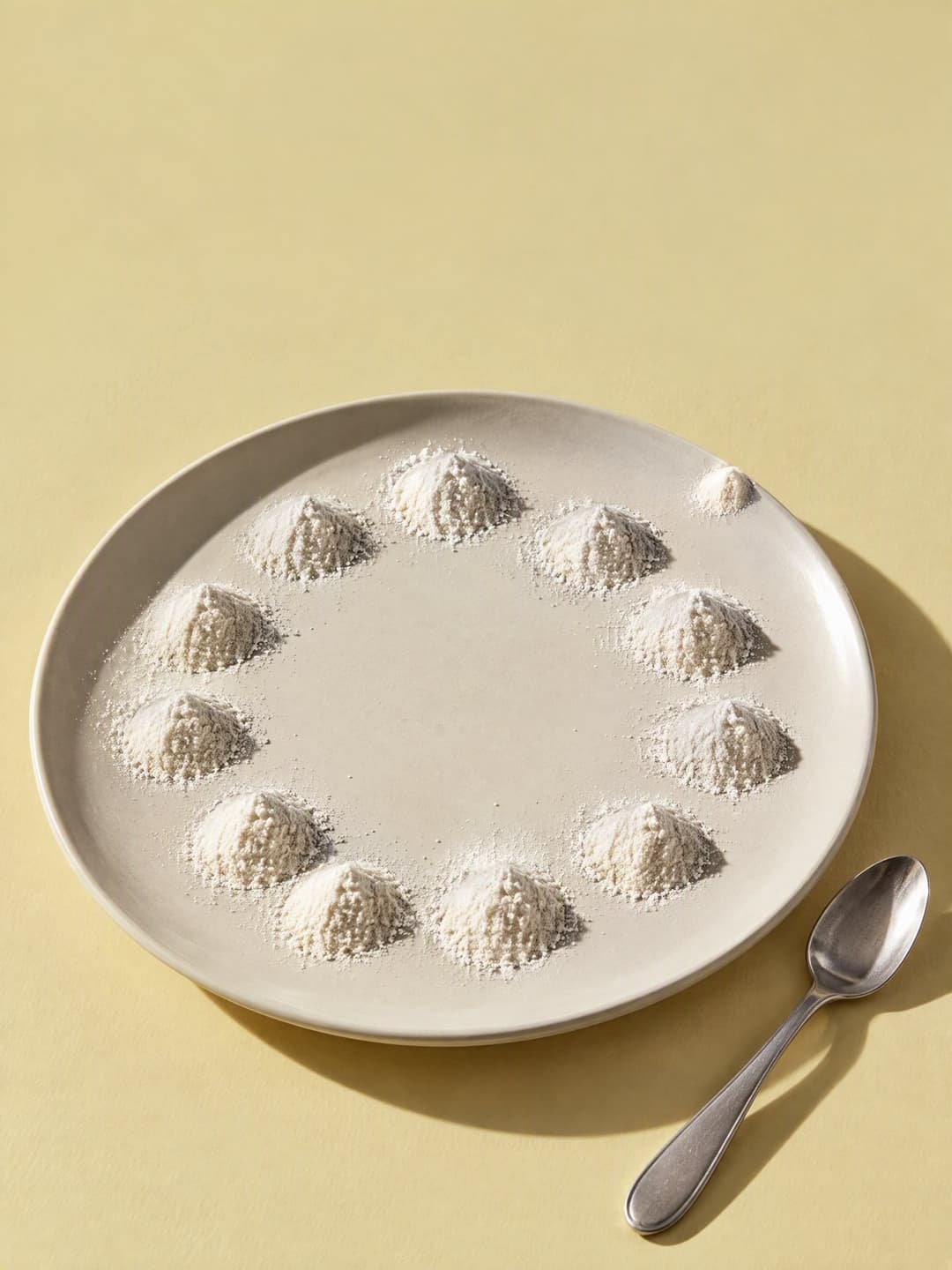
Amino acids join a shared pool. Muscles, organs, blood, hair and skin all draw from it, and the body serves them by its own priorities, not in the order you hoped for when you bought the jar.
Your face is in that queue. It is not first in line.
What the trials found.
In 2025 the American Journal of Medicine pooled 23 randomised controlled trials of collagen supplements for skin, with 1,474 people in total (Myung and Park, 2025).
23
randomised trials
1,474
people
None
clear effect in trials without company funding
None
clear effect in the high-quality trials
Pooled together, the trials showed better hydration, elasticity and wrinkles. Split by who paid for them, the picture changed: trials funded by supplement makers found an effect, the others did not. The highest-quality trials found no significant effect either. The authors concluded there is currently no clinical evidence that collagen supplements prevent or treat skin ageing.
To be fair to the other side: supplement makers have challenged how the paper sorted some trials by funding, so the debate is not closed. What it does mean is that the cleanest evidence does not back the promise on the jar.

So, should you stop?
That is your call. Collagen is a protein, and protein is good food. Just count it as nutrition, not as skincare. If the goal is your face, the shortest way to it is the one you can see: what you put on it.
Care that goes on the face
No needles.
Just hands.
A sponge and a salmon.
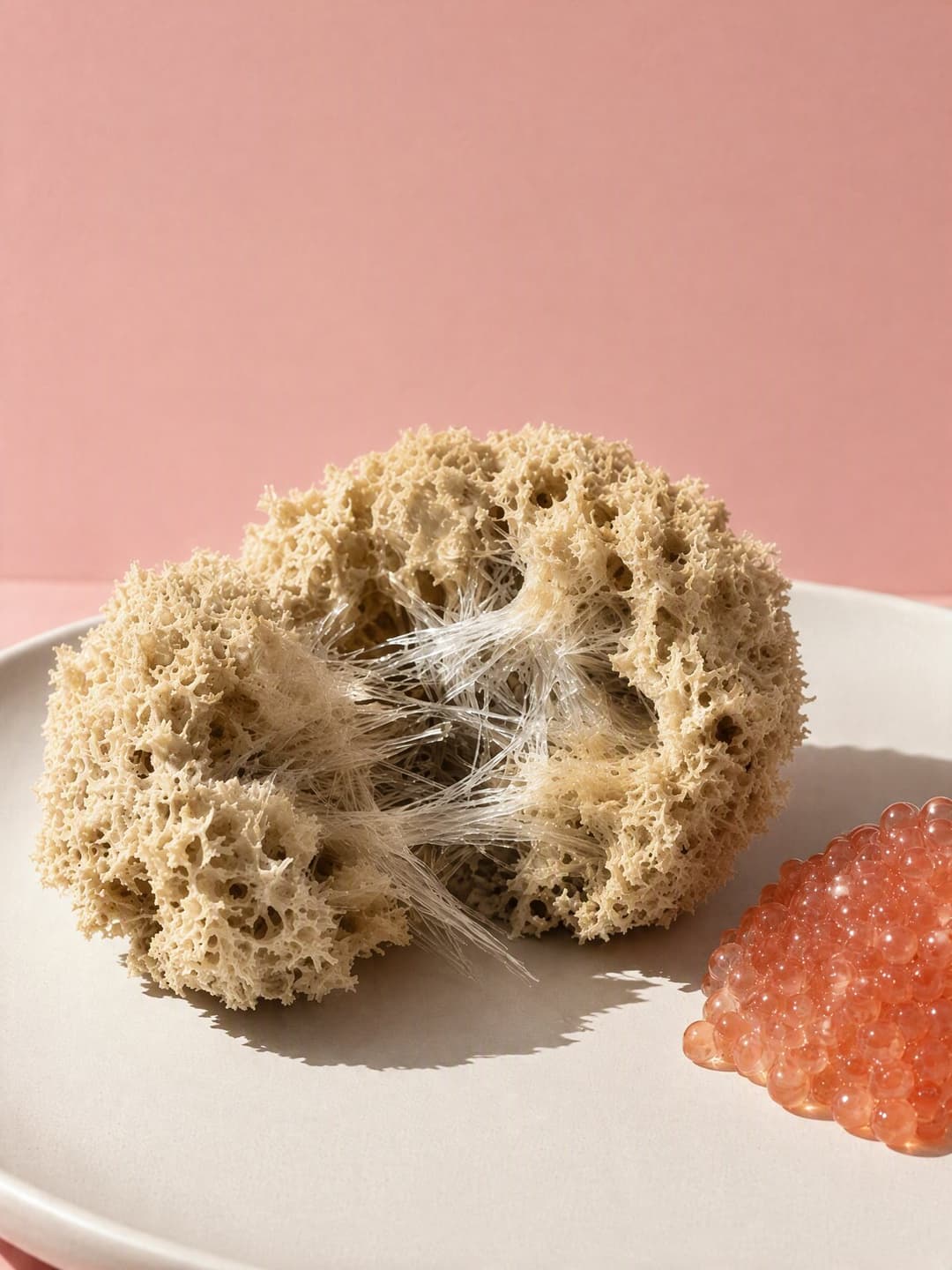
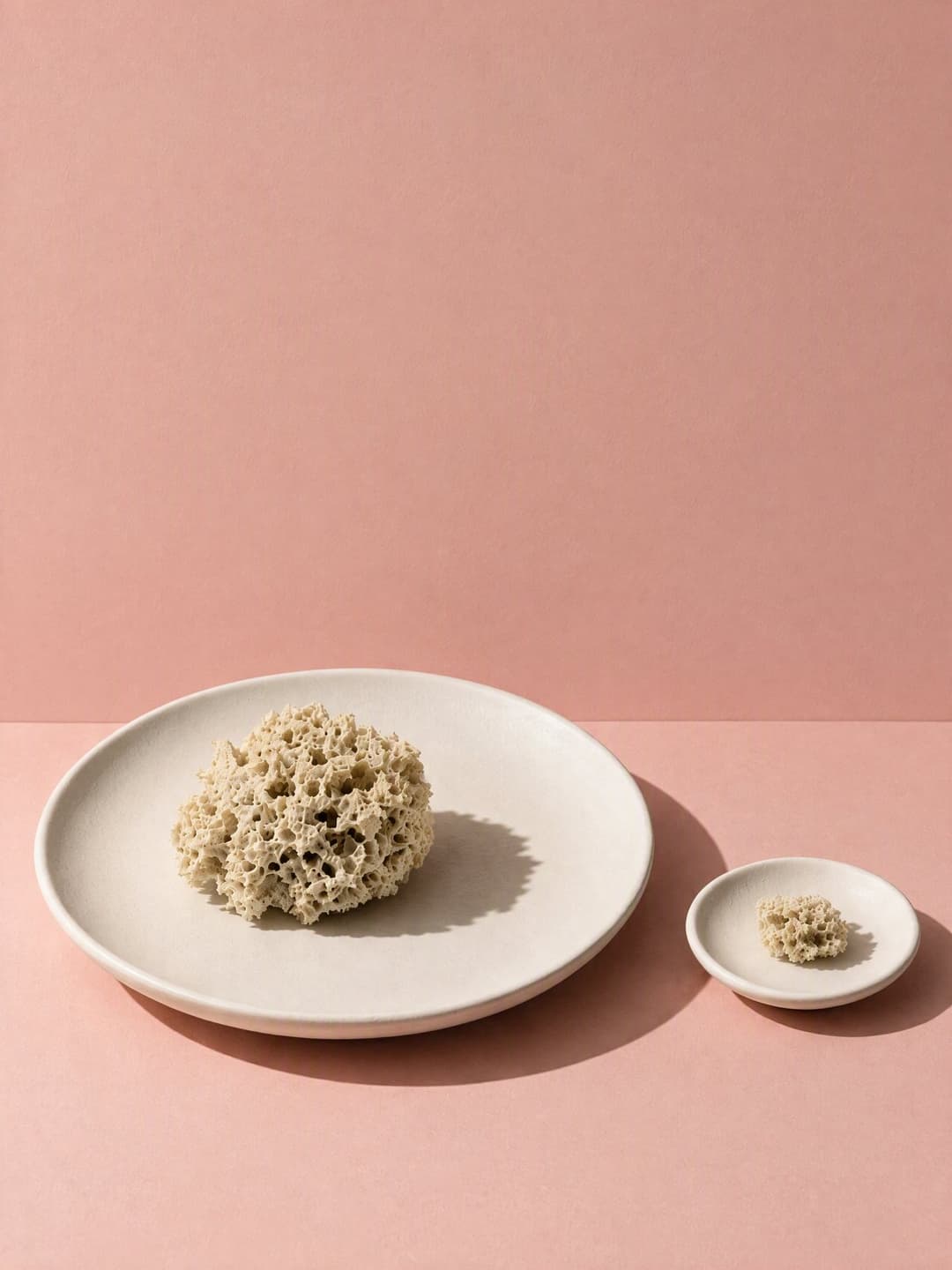
BIO-MESO PDRN starts from two unlikely sources. The first is a freshwater sponge, whose skeleton is made of microscopic, needle-like structures called spicules. The second is salmon: PDRN, the DNA fragment the line is named after, comes from salmon milt.
Pressed into skin by hand, the spicules give a light, prickly tingle, a little like needles, with no needles and no device. Both ampoules also carry 2% niacinamide for a more even tone and 0.04% adenosine for visible lines, and Korea registers the formula for both.
One idea, two strengths.
The numbers on the boxes, 60000 and 5000, are the strength of the whole BIO-MESO PDRN complex, not a count of spicules and not the PDRN dose. What separates the two is how much sponge each one carries.
In clinic
Expert Ampoule 60000
- · 5.72% sponge spicules
- · 1,120 ppm PDRN from salmon
- · 2% niacinamide, 0.04% adenosine
- · 4 × 3 ml ampoules
- · Applied by a trained specialist
At home
Homecare Ampoule 5000
- · 0.48% sponge spicules, about one twelfth
- · 1,010 ppm PDRN from salmon
- · 2% niacinamide, 0.04% adenosine
- · 50 ml tube
- · Once a week, in the evening
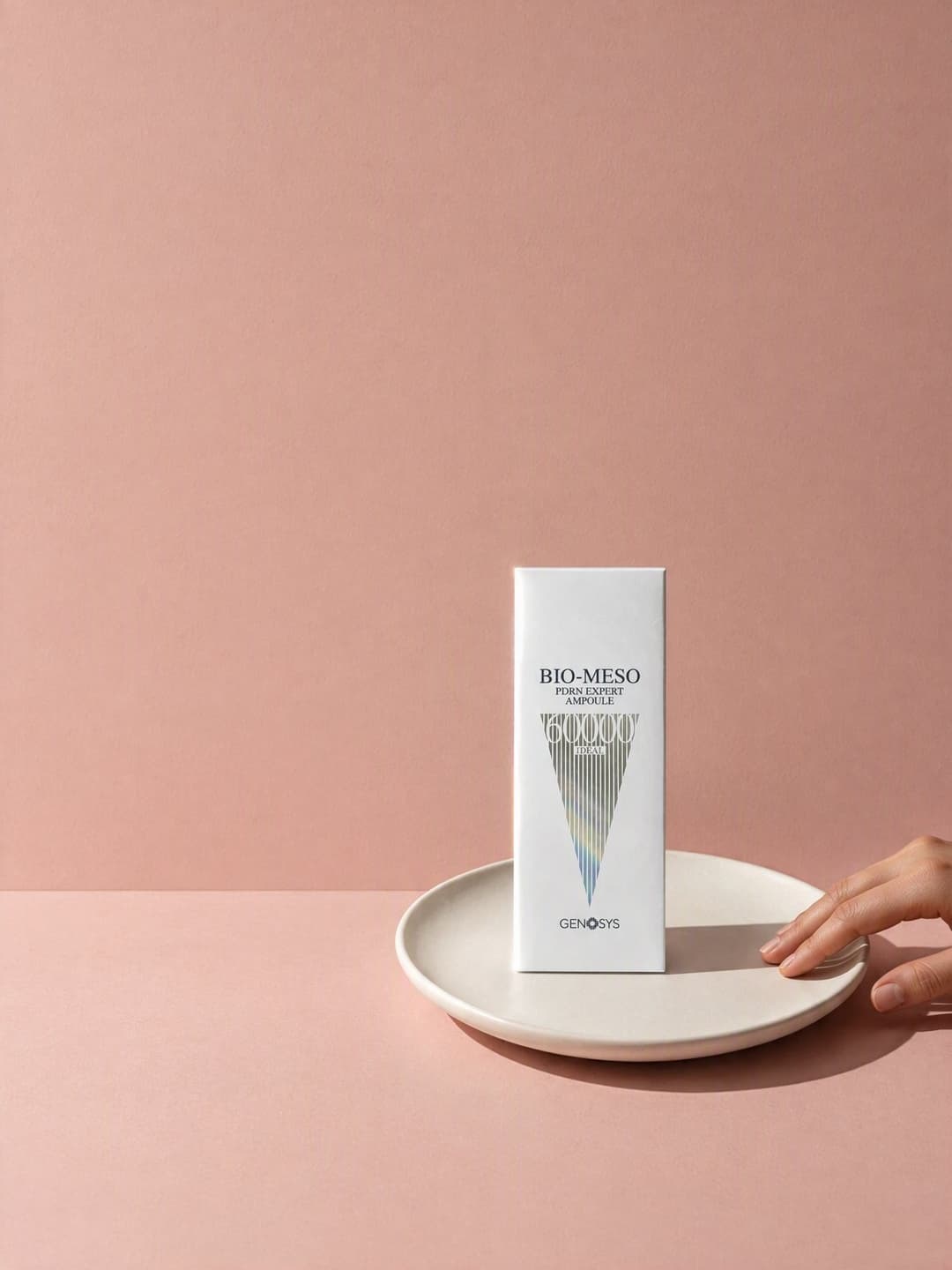
In clinic: the specialist’s hands.
The Expert Ampoule is a professional product. A trained specialist spreads it over clean skin, presses it in and rolls it with the palms, dot by dot, for about a minute.
Expect a light tingle and some warmth, a bit like mild sunburn, for a day or two, then a soft peel around day three to five. How strong and how long varies from skin to skin. Clinics: write to us for the professional protocol.
At home: the same idea, made gentle.
The Homecare Ampoule keeps the clinic idea and takes about one twelfth of the spicules, so you can carry it on between visits in your own hands.

3 ml. 30 seconds. Your hands.
Once a week, in the evening, on clean skin. Keep it away from your eyes and lips.
-
01
Spread
About 3 ml of the ampoule over the face.
-
02
Press
Gently press it in with your palms or fingertips.
-
03
Roll
Massage with rolling movements for about 30 seconds.
Want more? Follow straight away with the Skin Reboot PDRN Mask for 10 to 15 minutes. Next morning, finish with sunscreen. A light tingle, redness or a little peeling can come and go: leave the flakes alone, and skip acids, retinoids, peels and rollers until your skin has settled.
No needles. Just hands. In 30 seconds.
The reel from our Instagram: the sponge, the spread, the press, and both ampoules.
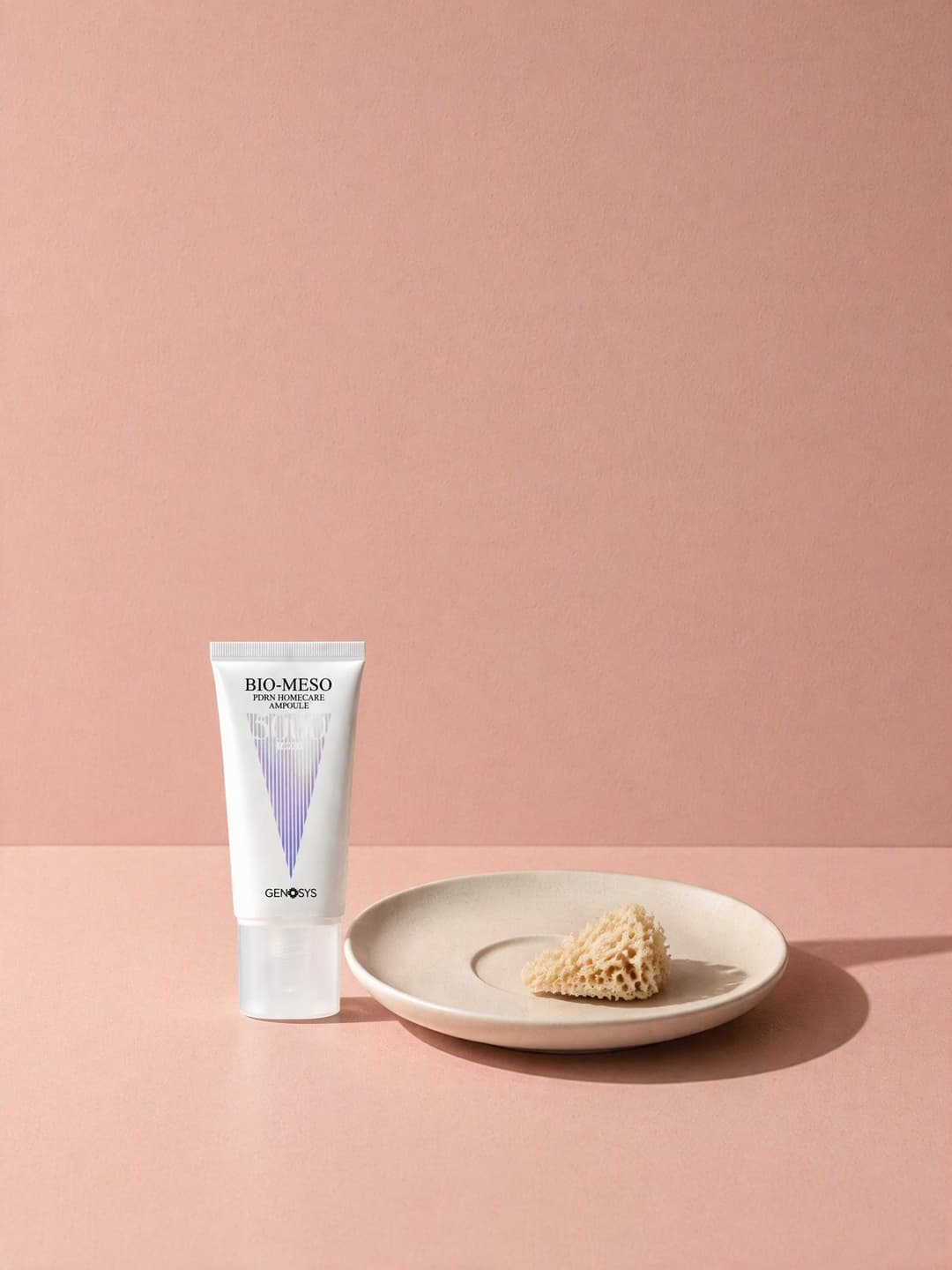
Between visits.
The Expert Ampoule is the clinic session. The Homecare Ampoule is what keeps the idea going between sessions, once a week, at your own sink. Start only once your skin has fully settled after a clinic treatment.
Is it for you?
A good match if
- ✓ You want more even-looking tone and softer-looking lines
- ✓ Needles put you off, but you like the idea of a professional treatment
- ✓ You want to carry a clinic treatment on at home
- ✓ You are happy with a tingle and a light peel as part of the process
Not now if
- → You have active pustular acne, active rosacea, an infection or open wounds
- → You have just had another face procedure, sunburn or a fresh tan
- → Your skin is very sensitive or you have an autoimmune skin condition
- → You are pregnant or breastfeeding: ask your doctor first
Good to know.
- Does the collagen in a drink reach my skin?
- Not as collagen. Digestion breaks it into amino acids and small fragments, and your body shares them out by its own priorities. In the cleanest trials, collagen supplements showed no clear effect on wrinkles, hydration or elasticity.
- Are the spicules needles?
- No. They are microscopic, needle-like structures from a freshwater sponge. There are no needles and no device: the ampoule is pressed in by hand.
- What do 60000 and 5000 mean?
- The strength of the whole BIO-MESO PDRN complex in each ampoule. They are not the number of spicules and not the PDRN dose, which is 1,120 ppm and 1,010 ppm.
- Can I use the Expert Ampoule at home?
- No. It is a professional product for a trained specialist. The Homecare Ampoule is the version made for home.
- How often can I use the Homecare Ampoule?
- Once a week, in the evening, about 3 ml. Sunscreen the next morning.
Seen on our Instagram
This article grew out of our latest BIO-MESO row on @genosys.uae.
The shortest way
to your face.
BIO-MESO PDRN · Expert Ampoule 60000 in clinic · Homecare Ampoule 5000 at home · 2% niacinamide · 0.04% adenosine · Made in Korea
Sources
Myung S-K, Park Y. Effects of Collagen Supplements on Skin Aging: A Systematic Review and Meta-Analysis of Randomized Controlled Trials. The American Journal of Medicine 2025;138(9):1264-1277. doi:10.1016/j.amjmed.2025.04.034. Product facts: the BIO-MESO PDRN formulas. This article is general information, not medical advice.
Published 31 October 2026 · by GENOSYS Team
Comments
Please log in to leave a comment
Log in